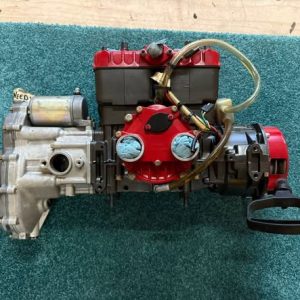
The Rotax 582 “Blue Head” RAVE Engine – Built by Rotax Rick may support an ultralight restoration, experimental-aircraft project, gyrocopter application, powered-parachute build, or replacement-engine requirement.
The Rotax 582 Blue Head and Rotax 582 Blue Head RAVE Engine descriptions identify related versions of the popular Rotax 582 Aircraft Engine, while the exact internal and external configuration should remain clearly documented.
A Rotax 582 Two-Stroke Engine may serve as a Rotax 582 Ultralight Engine or Rotax 582 Aviation Engine when its gearbox, cooling, exhaust, fuel, ignition, and mounting systems match the intended aircraft.
Whether buyers need a Rotax Blue Head Engine, Liquid-Cooled Aircraft Engine, Two-Cylinder Aircraft Engine, or Lightweight Aircraft Engine, the complete engine package should be evaluated.
These keywords support relevant SEO while preserving responsible guidance for aviation engine selection.
Key Details of the Blue Head Powerplant
Every model suffix, serial marking, gearbox designation, modification, and replacement component should be recorded because similar Rotax engines may differ internally or externally.
Informal build descriptions should not replace invoices, measurements, test results, or detailed builder records.
Understanding the Builder’s Role
The builder’s name alone should not replace a detailed review of internal specifications, clearances, service information, and operating history.
Any remaining break-in requirements, operating limitations, fuel recommendations, or follow-up inspections should be disclosed.
Inspecting the RAVE Components
Detailed inspection supports responsible evaluation of the Rotax 582 Blue Head RAVE Engine.
RAVE-system condition should be included in maintenance and pre-purchase records.
Understanding Rotax 582 Two-Stroke Power
Disciplined operation supports the service potential of the Rotax 582 Two-Stroke Engine.
Professional preparation supports responsible use of the Rotax 582 Aviation Engine.
Inspecting Radiator and Coolant Components
Cooling performance depends on the radiator, coolant pump, hoses, clamps, fittings, expansion tank, thermostat where installed, coolant condition, and airflow.
Temperature indications should be verified through reliable instruments rather than estimated through engine sound or appearance.
Inspecting Cylinders, Pistons, and Crankcase
The two-cylinder configuration combines a compact engine layout with coordinated crankshaft, piston, cylinder, induction, exhaust, and ignition operation.
Professional internal evaluation supports the long-term value of the Two-Cylinder Aircraft Engine.
Maintaining Smooth Engine Response
Complete carburetor preparation supports smoother Rotax 582 engine operation.
Fuel check here filters, pumps, lines, vents, tanks, and shutoff systems also influence dependable fuel delivery.
Inspecting Coils, Wiring, and Spark Plugs
A dual-ignition configuration can provide two ignition paths when the installed components and wiring operate correctly.
Spark-plug appearance can provide useful information about combustion, mixture, oil, and cylinder condition when interpreted correctly.
Understanding the Rotax 582 Gearbox
Different gearbox ratios can influence propeller selection, loading, aircraft performance, and engine operating behavior.
The gearbox should be inspected for unusual noise, backlash, leakage, bearing concerns, damaged mounting areas, corrosion, and previous repair.
Two-Stroke Expansion Chamber Considerations
A modified, damaged, leaking, or incorrectly supported exhaust may contribute to performance concerns or component stress.
Mounting should allow suitable support without transferring excessive vibration into the engine or aircraft structure.
Understanding Power-to-Weight Benefits
Published dry-engine weight should not be confused with complete installed-system weight.
Updated weight-and-balance information may be required after installation changes.
Ultralight and Experimental Aircraft Applications
Aircraft-specific evaluation supports responsible Ultralight Aircraft Engine selection.
An Experimental Aircraft Engine installation may require custom mounts, controls, radiator placement, exhaust routing, fuel-system work, instruments, and cowling modifications.
Matching the Engine to a Light Sport Project
The phrase Light Sport Aircraft Engine should be used carefully because aircraft eligibility and engine suitability depend on the exact aircraft, operating category, documentation, and applicable requirements.
Responsible documentation supports long-term Light Sport Aircraft Engine value.
Evaluating Engine Logbooks
Complete records improve engine valuation and maintenance planning.
Maintenance records should include inspections, carburetor work, ignition service, cooling-system maintenance, gearbox service, hose replacement, seal work, and any engine-removal events.
Engine Run Testing and Performance Evaluation
A controlled engine run can provide useful information about starting, idle quality, throttle response, cooling, ignition operation, fuel delivery, vibration, leakage, and unusual noise.
An unloaded or lightly loaded test may not reveal issues that appear under flight power.
Inspecting Rotax 582 Engine Health
Comprehensive mechanical evaluation supports informed purchasing.
Professional inspection protects buyers from relying solely on external appearance.
Rotax 582 Pre-Purchase Checklist
A pre-purchase review should confirm the exact model, serial number, RAVE configuration, builder documentation, engine hours, gearbox, carburetors, ignition, cooling components, exhaust, run-test results, and included accessories.
- Resolve identity, configuration, condition, compatibility, and package-completeness questions before payment.
- Inspect the engine for corrosion, coolant staining, fuel leakage, oil residue, damaged wiring, cracked hoses, loose fittings, impact marks, missing hardware, and unauthorized modification.
- Inspect and photograph the engine immediately after delivery before rotating, testing, disassembling, repairing, mounting, or connecting fuel and electrical systems.
Rotax Engine Packaging Requirements
Open fuel, oil, coolant, intake, and exhaust connections should be protected from contamination using suitable covers.
During storage, the engine should remain dry, clean, supported, preserved, and protected from moisture, dust, insects, corrosion, chemicals, and uncontrolled handling.
Professional Experimental Aircraft Engine Installation
Improvised mounting or unsupported accessories can create structural, vibration, leakage, and control concerns.
Ignition and electrical wiring should be grounded, routed, secured, and labeled appropriately.
Required aircraft records and operating limitations should be updated appropriately.
Routine Rotax 582 Inspection
Repeated adjustment should not replace diagnosis of an underlying engine or installation problem.
Operating data such as temperatures, engine speed, fuel consumption, plug condition, and ignition-check behavior can help identify developing concerns.
Evaluating Rotax Aircraft Engines for Sale
Honest product information strengthens buyer confidence and reduces disputes.
Buyers should compare complete engine packages rather than bare powerplants alone.
Final Thoughts on the Rotax 582 Blue Head
For a properly matched aircraft installation, the engine can provide compact aviation power when professionally inspected, installed, operated, and maintained.
The powerplant should not be judged solely through blue heads, clean paint, a 65HP description, builder recognition, or purchase price.
Whether the product is described as a Liquid-Cooled Aircraft Engine, Two-Cylinder Aircraft Engine, Lightweight Aircraft Engine, or Experimental Aircraft Engine, complete system compatibility remains essential.
With complete evaluation and continued care, the Rotax 582 “Blue Head” RAVE Engine – Built by Rotax Rick can deliver a professional combination of lightweight construction, liquid-cooled design, two-stroke power, and recreational aviation versatility.